Research Article | | Peer-Reviewed

Evaluation of Integrated Soil and Water Conservation Measures on Soil Properties, Soil Loss and Maize Production in Western Hararghe Zone, Oromia, Ethiopia

Published in Hydrology (Volume 14, Issue 3)
Received: 20 July 2026     Accepted: 8 September 2026     Published: 24 September 2026
Views:       Downloads:
Abstract

This study evaluated the effects of integrated biophysical soil and water conservation (SWC) measures on soil properties, soil loss and maize yield in Daro Lebu district, West Hararghe zone, from 2020 to 2022. The experiment arranged in a randomized complete block design (RCBD) with three replications, comprised eight treatments: Vetiver with bund, sole Vetiver, Elephant grass with bund, sole Elephant grass, Brachiaria with bund, sole Brachiaria, sole bund, and a control. Data were collected on soil properties, soil loss, plant height, number of cobs, and grain yield. The conservation measures improved soil properties relative to traditional practices. The lowest soil loss was recorded for Elephant grass with bund (4.85 t/ha) and Vetiver with bund (5.88 t/ha). The highest soil organic carbon (1.59%) was observed under Elephant grass with bund, followed by Vetiver (1.55%). Maize yield was highest under sole soil bund (5570 kg/ha), followed by the control (5416 kg/ha) and sole Brachiaria (5203 kg/ha), with no significant differences among treatments (p > 0.05). Although sole soil bund produced the highest maize yield in the short term, integrating Elephant grass with bund more effectively reduced soil erosion and enhanced soil properties in a sustainable manner. Therefore, the integration of Elephant grass with bund is recommended for the study area.

Published in Hydrology (Volume 14, Issue 3)
DOI 10.11648/j.hyd.20261403.11
Page(s) 55-63
Creative Commons

This is an Open Access article, distributed under the terms of the Creative Commons Attribution 4.0 International License (http://creativecommons.org/licenses/by/4.0/), which permits unrestricted use, distribution and reproduction in any medium or format, provided the original work is properly cited.

Copyright

Copyright © The Author(s), 2026. Published by Science Publishing Group

Keywords

Soil and Water Conservation, Crop Yield, Grasses, Soil Loss

1. Introduction
Cereal crops are the primary food crops for most poor smallholder farmers in Sub-Saharan Africa and together with livestock, constitute the main source of nutrition and income generation . Among cereals, maize is the third most consumed grain worldwide after wheat and rice and ranks as the most productive cereal by yield . In Sub-Saharan Africa, maize is a staple food security crop, providing a primary source of food and livelihood for an estimated 300 million people . It occupies 17% of cultivated land in the region and 21% in East Africa . In Ethiopia, maize is the second most important crop after tef in terms of area cultivated and first in grain production . Despite its importance, maize productivity in Ethiopia remains low, averaging less than 4.2 t/ha. This is attributed to pests such as the maize stem borer (Busseola fusca) and fall armyworm, as well as soil erosion and declining soil fertility . Soil erosion poses a particularly serious threat, with the average erosion rate from cropland estimated at 42 t/ha/yr . Similar estimates derived from experimental plots and a micro-watershed also put annual soil loss from cropland at about 42 t/ha . More severe cases have been documented: measured erosion rates of 130 to 170 t/ha/yr on cultivated test plots, while , using the Revised Universal Soil Loss Equation (RUSLE), reported annual soil losses ranging from negligible levels in flat plains to over 154 t/ha/yr on steeper slopes in Borkena woreda, South Wollo.
Beyond erosion, a study in South Ethiopia identified inherent soil fertility constraints, limited access to improved seeds, pests and diseases, erratic rainfall, deforestation, restricted access to credit, weak market linkages, and poor field management practices as major factors limiting maize production . Given these challenges, adaptable, resilient, and sustainable agricultural systems are essential to safeguard food production against the risks and shocks associated with long-term climate variability. Climate-smart and resilient agricultural systems are needed to protect and enhance natural resources and ecosystem services while mitigating future climate change . Achieving sustainable agriculture in this context requires a holistic approach that reflects the multi-functional nature of agriculture and employs resource-conserving technologies and practices in managing weeds and pests .
Integrated soil and water conservation (SWC) technology offers diversified pathways for mitigating the effects of climate change . Research indicates that combining physical conservation structures with biological interventions can enhance soil organic matter (SOM), nitrogen, phosphorus, and water retention . The selection of grass species to be integrated with soil bunds is therefore highly demanded, given their wider adaptability, greater economic value, and effectiveness in reducing soil erosion . Despite this recognized potential, the effectiveness of vetiver grass (Chrysopogon zizanioides), elephant grass (Pennisetum purpureum), and Brachiaria in controlling soil erosion and improving soil properties has been rarely studied for enhancing physical SWC measures such as soil bunds in West Hararghe, Ethiopia. The root and shoot structures of these grasses are inherently well-suited to soil and water conservation compared with alternative biological measures reported that vetiver grass strips can improve the natural resource base in degraded areas, stabilize physical structures, and sequester carbon. These technologies also provide additional benefits by supplying high-quality livestock forage that improves animal health and milk production, thereby contributing to higher incomes and better nutritional security among smallholder households.
SWC measures are implemented to address soil degradation, which is a major constraint to maize production in Africa . Land degradation a widespread global phenomenon has led to crop failure, food shortages and malnutrition, apart from severe financial hardship . Soil erosion, caused primarily by water and wind, is among the principal drivers of land degradation, resulting in the loss of soil, water, biota, and topsoil nutrients. In contrast, improved practices promote efficient nutrient recycling, enhance rainwater infiltration, and thereby stimulate plant growth. Moreover, biological SWC technologies are well suited to smallholder farmers because they effectively address major production constraints while remaining economical, relying as they do on locally available plants rather than expensive external inputs.
The Hararghe region is characterized by a high population density and steep topography, with average landholdings of only 0.85 ha per household in West and East Hararghe (ranging from 0.125 to 3.75 ha) . Given these constraints, integrating crop-livestock-soil systems represents a more appropriate approach to land use, and physical SWC measures integrated with grasses are particularly important. Grasses serve multipurpose functions for farmers: they provide animal feed, stabilize physical SWC structures, and reduce soil erosion. Information on the management of integrated physical and biological conservation measures is therefore crucial for reducing soil erosion from farmlands and contributing to sustainable soil conservation. To date, however, scant scientific research has examined the performance of biological stabilizers in SWC through animal feed production in a way that explicitly integrates farmers' needs and environmental objectives in Eastern Ethiopia. To overcome the challenges of animal feed scarcity and soil degradation, forage grasses, legumes, crops, and other processed forages must be addressed through research and development organizations.
Forage grasses such as elephant grass, Brachiaria and vetiver grass are among the major improved grass species that have significantly contributed to livestock production and have been adopted by the Mechara Agricultural Research Center for West Hararghe. Biological soil and water conservation (SWC) is an effective and low-cost technology, as it addresses several major constraints faced by smallholder farmers . When integrated with physical SWC measures, biological conservation not only addresses key constraints affecting maize production including soil loss and feed scarcity, but also stabilizes physical structures thereby reducing maintenance costs . Information on the management of integrated physical and biological conservation measures is crucial for reducing soil erosion from farmlands and in turn, contributing to sustainable soil conservation. Integrated SWC measures significantly reduce the soil erosion rate and thereby improve soil properties, leading to enhanced agricultural productivity . Therefore, the objective of this study was to evaluate the effects of integrating soil bunds with biological SWC measures on soil properties, soil loss reduction and maize yield in the study area.
2. Material and Methods
2.1. Description of Study Area
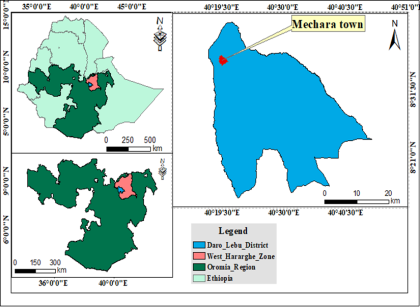
The study was conducted at the on-station of Mechara Agricultural Research Center in Daro Labu district. The center is located 435 km east of Addis Ababa and 115 km south of Chiro, the zonal capital, along a gravel road connecting the Arsi and Bale zones. Maize and sorghum are the major cereal crops cultivated in the area. The altitude ranges from 1040 to 1780 m above sea level, covering a land area of 156,460 ha (Hailu et al., 2024; Ayala et al., 2022). The area experiences a bimodal rainfall pattern, with a summer (kiremt) rainy season from June to September and a spring (belg) season from February to May, receiving an average annual rainfall of 1145 mm. Higher rainfall is received in April (188.0 mm) and May (139.5 mm) during the belg season, and in July (118.0 mm) and August (146.2 mm) during the kiremt season. The mean annual temperature is 21°C, with minimum and maximum values of 13°C and 27°C, respectively . The soils of the study area are predominantly reddish-brown Nitisols . They are generally clay-dominated, characterized by low available phosphorus, and have a pH ranging from 5.3 to 6.0 in the surface soils.
Figure 1. Map of study area .
2.2. Treatments and Experimental Design
The experiment was conducted for three consecutive cropping seasons (2020-2022). In the first year (2020), the soil bunds and grasses were established, whereas maize was sown in the second and third years. The combination of biological soil and water conservation (SWC) measures, both with and without soil bund structures, along with a control (non-conserved plot), was evaluated on plots areas of 3.75 m width and 5 m length. The spacing of 2 m between blocks and plots were used. The experiment was arranged in a randomized complete block design (RCBD) with three replications. Three grasses comprised of elephant grass (Pennisetum purpureum), vetiver grass (Vetiveria zizanioides) and Brachiaria (B. ruziziensis) were used as biological SWC measures. An early-maturing maize variety, Melkasa-2, was sown at 75 cm inter-rows and 30 cm within rows. Fertilizer was applied at the recommended rates of 100 kg/ha Urea and 100 kg/ha NPSZn. Soil bunds were constructed on the upper part of each experimental plot with a top width of 50 cm, a berm of 0.20 m, a height of 50 cm and a bottom width of 120 cm. Construction was carried out during sthe dry season to avoid interference with land preparation. Brachiaria, vetiver and elephant grass were planted on the bunds both to stabilize the structures and to slow the flow of surface water. A spacing of 50 cm × 30 cm was used for Brachiaria, while 50 cm × 50 cm was used for both vetiver and elephant grass between rows and plants. Two rows of each grass species were planted on the soil bund, as well as in plots without a bund. The land slope was approximately 5%. Eight treatments namely; vetiver with soil bund, sole vetiver grass, elephant grass with soil bund, sole elephant grass, Brachiaria with soil bund, sole Brachiaria grass, sole soil bund, and a control (no soil bund and no grasses) were established.
2.3. Types of Data and Method of Data Collection
2.3.1. Soil Loss Data
To determine the amount of soil loss reduced by each conservation measures, graduated pegs were staked below ground at a depth of 30 cm. Each plot was divided into three sections (upper, middle and lower) with pegs placed at 1 m intervals at the beginning and end of each cropping season. The amount of soil added or lost was then monitored and measured three times during the crop season and the mean soil loss per plot was converted from plot area to a per-hectare basis.
2.3.2. Soil Sampling and Analysis
Composite soil samples were collected from the experimental plots at a depth of 0-30 cm. All samples were air-dried under shade, ground using a pestle and mortar, and sieved to pass through a 2 mm sieve before being sent to the laboratory for analysis. The samples were analyzed at the beginning and end of each cropping season for pH, organic carbon (OC), total nitrogen (N), available phosphorus (P), Cation exchange capacity (CEC) and soil texture. Soil pH was determined in a 1:2.5 soil-to-water suspension following the procedure outlined by . Organic carbon content was measured using the wet combustion method of and soil organic matter content was calculated by multiplying the organic carbon content by a factor of 1.724. Total nitrogen was determined following the Kjeldahl procedure. Available phosphorus was analyzed using the Bray I method, appropriate for the acidic soils (pH below 7) of the study area . Cation exchange capacity was determined using the 1 M ammonium acetate (pH 7) method, according to the percolation tube procedure described by . Soil texture was determined using the hydrometer method.
2.3.3. Yield and Yield Components
The growth and yield parameters recorded included plant height, number of heads, head weight, and grain yield. Plant height was measured from ground level to the apical tip using a meter tape. Stand count at harvest was recorded by counting the number of plants per plot. Head weight was measured in grams. Grain yield, expressed in kilograms per hectare (kg/ha), was weighed using a balance and adjusted based on seed moisture percentage according to formula (1), with all grain yields reported at 12.5% moisture content.
Adjusted Yield=Yld kg/plot(100-% moisture)(100-12.5%) (1)
where; yld kg/plot = yield in kilogram per plot,% moisture = grain moisture content in percentage.
2.3.4. Data Analysis
The effects of soil and water conservation (SWC) practices on soil loss and maize yield were analyzed using R software (version 4.2). Treatment means were separated using the least significant difference (LSD) test at the 5% significance level. The effects of SWC practices on soil properties were analyzed using descriptive statistics, based on treatment means.
3. Results and Discussions3.1. Effect of Soil and Water Conservations on Soil Physico Chemical Properties
Pre and post planting soil samples were collected and analyzed using different methods. A composite pre-sowing soil sample was taken to characterize the initial status of the plots before the study, as presented in Table 1.
Table 1. Soil Physico chemical characteristics of soils for treatments.

Treatments

pH

EC (dS/cm)

Av. P (ppm)

OC (%)

TN (%)

Av. K (mg/kg)

CEC (meq/100 gm soil)

Texture

Bracharia only

5.36

0.036

4.22

1.39

0.11

198.1

22.69

Sandy clay loam

Elephant only

5.37

0.033

6.77

1.55

0.13

127.2

22.22

Bracharia +Bund

5.44

0.039

3.43

1.46

0.12

196.4

21.1

Control

5.42

0.046

4.96

1.43

0.12

194.7

21.86

Bund only

5.4

0.046

4.04

1.39

0.13

214.2

17.21

Vetiver only

5.43

0.033

10.56

1.55

0.13

182.6

22.95

Vetiver+bund

5.43

0.043

6.74

1.42

0.12

233.7

19.19

Elephant+ bund

5.45

0.036

4.1

1.59

0.12

136.6

22.29

Mean

5.42

0.04

5.73

1.49

0.12

184.01

21.16

Pre soil sample

5.41

0.045

4.96

1.42

0.11

193.5

21.80

3.1.1. Soil Texture
The soil texture of the experimental area was sandy clay loam, which is characterized by low water holding capacity. The textural classes of the cropland sites treated with the different SWC measures were found to be the same (Table 1), consistent with the findings of , who reported that cropland sites treated with different SWC measures retained the same texture as the pre-sampled soil from the same site. In this study, soil texture was less affected by soil and water management practices. This finding agrees with but is contrary to and , who reported that the implementation of biophysical SWC measures improves soil texture by trapping fertile soil particles. Soil texture is an inherent physical property that determines numerous physical and chemical properties of soils. It influences water infiltration and soil water retention, soil aeration, nutrient absorption, microbial activity, the ease of tillage, and irrigation practices, and ultimately affects soil fertility . For this soil type, conservation practices can improve water infiltration, soil organic matter, structure, and bulk density .
3.1.2. Soil pH
The mean values of pre soil pH was in range of slightly acidic (pH=5.41) on Table 1. The post-harvest soil pH is ranges between 5.3-5.5 for all treatment (show slightly acidic). There are slight changes in soil PH and the highest soil pH was found on the treatments of elephant with soil bund and bracharia with soil bund. This was because of the integrated soil bunds with grasses hinder water passing and increasing leaching of basic cations, leaves of grasses decomposed to increase soil organic matter and soil deposition comes from upper part of the soil bund containing different nutrients. These findings agree with those of , who reported an increasing trend in soil pH under integrated SWC measures, attributing this to a reduction in the loss of soil organic matter and exchangeable bases through soil erosion and runoff. The results are also consistent with , who stated that soil and water conservation measures improve soil health by increasing soil organic matter content, reducing soil erosion, and conserving soil moisture.
3.1.3. Electrical Conductivity (EC)
The mean electrical conductivity (EC) values for all treatments were below 0.15, indicating no adverse effect on plant growth. Soil EC measures the soil's ability to conduct an electrical current, which is influenced by moisture content, texture, salinity, and temperature. Water conservation practices, such as contour plowing, can positively affect soil EC by improving moisture retention and reducing salinity. This creates a more stable environment for microbial activity and nutrient availability, ultimately enhancing soil health.
3.1.4. Cation Exchange Capacity (CEC)
The pre-trial soil mean CEC was 21.8 cmol/kg, which falls under the medium category and indicates moderate soil fertility. Across all treatments in the study area, the overall mean CEC values ranged from 17.21 to 22.95 cmol/kg. According to , a CEC below 5 cmol/kg is classified as low, 5-25 cmol/kg as medium, and above 25 cmol/kg as high. Based on this classification, the results of this experiment fall within the moderate range, indicating medium soil fertility.
3.1.5. Soil Organic Carbon
Soil and water conservation (SWC) practices influenced the soil organic carbon (OC) content of farmlands. The mean OC (%) across all treatments ranged from 1.39% to 1.59%, a range classified as moderate similarly categorized OC as very low (<0.6%), low (0.6-0.99%), moderate (1-1.59%), high (1.6-1.99%) and very high (>1.99%). The highest OC values were recorded on plots combining elephant grass with soil bunds (1.59%) and on vetiver and elephant grass treatments (1.55%), as shown in Table 1. This finding aligns with , who reported higher soil OC on lands conserved with soil and water conservation measures compared to non-conserved sites. Most cultivated soils in Ethiopia are poor in SOC content, largely due to the limited amounts of organic materials applied and the complete removal of biomass from fields. In this study area, however, grass litter falling on the land returned organic matter and biomass to the soil, contributing to a suitable range of SOC. The highest SOC was observed under the integrated soil and water conservation structures.
3.1.6. Available Phosphorus (P)
Available phosphorus (P) varied considerably across the different SWC practices. Pre-intervention soil available P was low at 4.96 ppm, while post-harvest mean values across the study area ranged from 3.43 to 10.56 ppm (Table 1). According to , who classified available P as very low (<3 ppm), low (4-7 ppm), medium (8-11 ppm), and high (>12 ppm), these values range from low to medium. The highest available P was recorded on the vetiver grass-only treatment (10.56 ppm), followed by the elephant grass-only treatment (6.77 ppm), both exceeding pre-trial soil P and control treatments. Notably, available P on the vetiver grass treatment was two-fold higher than that of both the control and pre-soil treatments.
3.1.7. Total N and Available K
The pre soil sample soil total nitrogen (TN) mean was 0.11%, which is categorized as low status. Post-harvest TN content across all treatments ranged from 0.11% to 0.13% (Table 1), also classified as low according to , who categorized total N as very low (<0.05%), low (0.1-0.15%), medium (0.15-0.25%), and high (>0.25%). Total nitrogen in the study area was therefore categorized as low across all treatments, whereas available potassium, ranging from 150 to 250 mg/kg, was categorized as medium . In terms of soil physicochemical properties, all measured properties fell within the medium range for plant growth, with N being the only exception . In summary, the implementation of integrated soil and water conservation (SWC) measures significantly improved key soil chemical properties, including organic matter (OM), total nitrogen (TN), available phosphorus (available P) and soil pH. This improvement is attributed to the accumulation of organic residues and enhanced vegetation cover in conserved areas .
3.2. Effect of Soil and Water Conservations on Yield and Yield Parameters of Maize
Table 2 presents the effects of different soil and water conservation (SWC) structures on selected growth parameters and yield of maize. The ANOVA results showed a significant difference (p<0.05) in maize yield (kg/ha) among treatments, whereas no significant differences were observed in plant height or the number of cobs per plot. The highest maize yield (5570 kg/ha) was recorded on the soil bund-alone treatment, followed by the control (5416 kg/ha) and bracharia-only (5203 kg/ha) treatments, though these did not differ statistically from the other treatments. This suggests that integrated SWC measures may not improve crop production in the short term, likely because vigorous grasses competed with maize for nutrients and thereby reduced yield compared with sole soil bunds and the control. This short-term effect is consistent with , who noted that the capacity of SWC practices to restore soil properties and enhance yield depends on the age of the structures. The finding also aligns with , who highlighted that biophysical SWC practices can markedly increase wheat yield through improved water retention, reduced runoff, and greater nutrient availability. Elephant and vetiver grasses, in particular, grow vigorously and compete with maize for nutrients, negatively affecting maize yield more than bracharia grass. This likely explains why the highest maize yields occurred on the soil bund-alone and control treatments in the short term.
Table 2. Combined mean of growth and yield of maize in 2021-2022 years.

Treatments

No of Cobs/plot

Plant height (cm)

Yield (kg/ha)

Vetiver

66.83

203.3

4875ab

Elephant

64.33

198.3

4570ab

Bund alone

71.5

196.1

5570a

Bracharia +bund

70.83

203.1

4820ab

Bracharia

72.67

199.5

5203ab

Elephant+bund

66.0

198.4

4353b

Vetiver +bund

64.33

198.7

4693ab

Control

68.83

194.5

5416a

Mean

68.2

199

4937

LSD (0.05%)

13.28

10.74

1003.8

CV (%)

11.1

3.1

11.6

3.3. Effect of Soil and Water Conservations Measures on Soil Loss
The effect of soil and water conservation (SWC) measures on mean soil loss (t/ha) is presented in Table 3. Although there was no statistically significant difference in soil loss among treatments, clear numerical trends emerged. The lowest soil losses were recorded on the elephant grass with bund (4.85 t/ha) and vetiver with soil bund (5.88 t/ha) treatments, followed by bund alone (5.9 t/ha), while the highest soil loss occurred on the control (without structure). The elephant grass with bund and vetiver with soil bund treatments effectively reduced soil erosion, as the root systems of elephant and vetiver grasses help stabilize the soil bund and soil structure.
Table 3. Impact of soil and water conservation measures on soil loss.

Treatments

Soil loss (t/ha/)

Vetiver

6.6

Elephant

6.69

Bund alone

5.9

Bracharia +bund

7.18

Bracharia

8.19

Elephant+bund

4.85

Vetiver +bund

5.88

Control

13.2

Mean

7.64

LSD (0.05%)

11.01

CV (%)

19.37

Therefore, the elephant grass with soil bund and vetiver with soil bund treatments performed well in reducing soil loss on cultivated land compared to the control. This finding agrees with , who reported that soil bunds combined with elephant grass reduced soil loss and runoff by 63% and 40%, respectively, relative to the untreated control plot. The higher efficiency of elephant grass can be attributed to its relatively faster growth rate and denser rooting structure, which trapped sediment and runoff. It should be noted, however, that this activity was carried out over only two years, and soil and water conservation measures may not significantly reduce soil erosion in the short term. Indeed, found that vetiver grass required at least three years of establishment to conserve soil and water effectively. Beyond erosion control, the companion plants also provide high-value animal fodder, increasing milk production and diversifying farmers' incomes.
3.4. Relationship Between Maize Yield and Soil Loss
As shown in Tables 2 and 3, the mean maize yield and yield components obtained under integrated biophysical soil and water conservation (SWC) measures were lower than those under the sole soil bund treatment. However, the lowest mean soil loss (t/ha) was recorded under the integrated biophysical measures compared to the sole soil bund. This can be attributed to the fact that integrated SWC measures may not improve crop production in the short term: the grasses grew vigorously and competed with the surrounding maize for nutrients and soil moisture, thereby reducing maize yield compared to plots without bunds and plots with sole soil bunds.
3.5. Limitations of the Study
In this study, graduated erosion pins were used to measure soil loss from the plots. To improve the precision and reliability of the measurements, each plot was divided into three sections: upper, middle, and lower. Erosion pins were installed at 1 m intervals, with each pin inserted 30 cm into the ground. This systematic setup helped minimize measurement error and enhance the accuracy of the soil loss estimates.
4. Conclusion and Recommendation
Based on the results obtained, elephant grass combined with soil bunds significantly reduced soil loss and improved soil physicochemical properties compared to the other treatments. In terms of maize grain yield (kg/ha), however, the highest yield were observed under the sole soil bund treatment, followed by farmer practice (control) and the sole bracharia grass treatment. Although the highest maize yields were recorded on the sole soil bund and farmer practice (control), the combination of soil bund with elephant grass significantly reduced soil erosion and enhanced soil properties, moisture conservation, and sustainable soil management compared to the other methods over the short term on small plots. Therefore, elephant grass combined with soil bunds is recommended for long-term implementation to support sustainable soil management in the study area and similar agro-ecologies, given its benefits in reducing soil erosion and improving soil properties. Since this study was conducted over only three years and the full effects of soil and water conservation measures require long-term data, future research should evaluate these practices over extended periods and across multiple locations.
Abbreviations

SWC

Soil and Water Conservation

PH

Power of Hydrogen

CV

Coefficient of Variation

OC

Organic Carbon

SOC

Soil Organic Carbon

Lsd

Least Significant Difference

EC

Electrical Conductivity

CEC

Cation Exchange Capacity

Av. K

Available Potassium

AV. P

Available Phosphorus

Total N

Total Nitrogen

Acknowledgments
I acknowledge Oromia Agricultural Research Institute for funding the project.
Author Contributions
Gamachu Ayala Tarafa: Conceptualization, Formal Analysis, Investigation, Validation, Visualization, Writing – original draft
Fereja Shaka Ebisa: Formal Analysis, Investigation, Writing – review & editing
Habtamu Hailu Tolosa: Formal Analysis, Investigation, Writing – review & editing
Funding
This study was financial funded by Oromia Agricultural Research Institute, Ethiopia.
Data Availability Statement
Data will be available upon request.
Conflicts of Interest
The authors declare no conflicts of interest.
References
[1] Ayala G, Bulti A, Muleta B Evaluation of Mulching and Tied Ridges on Soil Moisture and Yield of Maize at Daro Lebu District, Western Hararghe Zone, Oromia, Ethiopia. International Journal of Agricultural Economics, 2023. 8(3), 116-121.
[2] Olaniyan AB Maize: Panacea for hunger in Nigeria. African Journal of Plant Science. 2015, 9(3), 155-174.
[3] FAO World food and agriculture. FAO Rome Italy, 2015. 8(4).
[4] Macauley H, Ramadjita T (2015). Cereal crops: Rice, maize, millet, sorghum, wheat.
[5] NDLOVU E Impact of Tree Species on Maize Productivity by Smallholder Farmers in Eastern Kenya (Doctoral dissertation, Msc Thesis, Jomo Kenyatta University of Agriculture and Technology), (2013).
[6] Abate W. Analysis of agricultural technology adoption: the use of improved maize seeds and its determinants in Ethiopia, evidence from Eastern Amhara. Journal of Innovation and Entrepreneurship, 2024.13(1).
[7] CSA (Central Statistical Authority) Federal Democratic Republic of Ethiopia. Statistical Abstracts Agency. Addis Ababa (2018).
[8] Ayala G, Muleta B, Bulti A Assessment of Status of Irrigation Practice and Utilization in Western Hararghe Zone, Oromia, Ethiopia. Civil and Environmental Research, 2018. 10(5).
[9] Hurni H Degradation and conservation of the resources in the Ethiopian highlands. Mountain Research and Development, 1986. 8: 123-130.
[10] Bekele W Economics of soil and water conservation: Theory and empirical application to subsistence farming in the eastern Ethiopian highlands, 2003. (No. 411).
[11] Hurni HS, Abate A, Bantider B, Debele E, Ludi B, Portner B, Yitaferu GZ Land Degradation and Sustainable Land Management in the Highlands of Ethiopia. In Hurni, H. and U. Wiesmann (eds.) (2010) Global Change and Sustainable Development:
[12] Shiferaw B, Prasanna BM, Hellin J Crops that feed the world 6. Past successes and future challenges to the role played by maize in global food security. Food Sec., 2011. 3, 307-327.
[13] Yokamo S, Oyka E, Tsala T, Wotro W Identification and prioritization of major agricultural production and productivity constraints in the case of Basketo special district of Southern Ethiopia. Open Access Journal, 2018. 15(3), 1-7.
[14] Midega CA, Pittchar JO, Pickett JA, Hailu GW, Khan ZR A climate-adapted push-pull system effectively controls fall armyworm, Spodoptera frugiperda (JE Smith), in maize in East Africa. Crop protection, 2018. 105, 10-15.
[15] FAO Briefing note on FAO actions on fall armyworm in Africa. FAO Briefing Note on FAW, 2018. 1-7.
[16] Ndayisaba PC Climate change mitigation through improved soil health: carbon sequestration, nitrogen and phosphorus availability under the push-pull technology as a case study (2022) (Doctoral dissertation, JKUAT-CoANRE).
[17] Desta Z, Birhane E, Haile M Effect of biophysical soil and water conservation measures on physicochemical soil properties and their implications for climate resilience in degraded hillside landscapes of Tigray, Ethiopia (2025).
[18] Gelaye Y, Shumie M, Musie S Impact of biophysical soil and water conservation practices on soil quality and bread wheat yield in Ethiopia : a bibliographic review, 2025.
[19] Amare T, Derebe A, & Yitaferu B Ecohydrology & Hydrobiology Combined effect of soil bund with biological soil and water conservation measures in the northwestern Ethiopian highlands. Integrative Medicine Research, 2014. 14(3), 192-199.
[20] Guto SN, De Ridder N, Giller KE, Pypers P, Vanlauwe B Minimum tillage and vegetative barrier effects on crop yields in relation to soil water content in the Central Kenya highlands. Field Crops Research, 2012. 132, 129-138.
[21] Hailu G, Niassy S, Zeyaur KR, Ochatum N, Subramanian S Maize-legume intercropping and push-pull for management of fall armyworm, stemborers, and striga in Uganda. Agronomy Journal, 2018. 110(6), 2513-2522.
[22] Gamachu A, Shimelis B, Olkeba T Assessing the effect of soil and water conservation practices on runoff and sediment yield on Hunde Lafto watershed of Upper Wabi Shebelle Basin. Civil and Environmental Research, 2017. 9(9), 36-49.
[23] Tadesse E, Tucho TA, Hundesa F, Weldu G, Weldu T, Balay TK, Tibesso OTraditional cattle production in the highlands of Hararge: Case study for East and West Zones of the high lands of Harerge, Eastern Ethiopia. Basic Research Journal of Agricultural Science and Review, 2014. 3(12), 122-131.
[24] ICIPE Push-pull Curriculum for Farmer Field Schools. International Centre of Insect Physiology and Ecology, Nairobi, Kenya. ISBN, 2007. 92 9064188 6
[25] Yakob G, Gebremicheal A, Aklilu A, Melaku E Participatory evaluation of different multipurpose grass species for graded soil bund stabilization in Gimbo district, South West Ethiopia. Open Access Library Journal, 2015.2(6), 1-10.
[26] Mesfin S, Taye G, Hailemariam M Effects of integrated soil and water conservation measures on soil aggregate stability, soil organic matter and soil organic carbon stock of smallholder farmlands in semi-arid Northern Ethiopia. Carbon Management, 2018. 9(2), 155-164.
[27] Hailu H, Wogi L, Feyissa S Assessment of Irrigation Water Quality Status in Dry Season Wheat Production in Selected Districts of West Hararghe Zone, Ethiopia. Cross Current International Journal of Agriculture and Veterinary Sciences, 2024. 6(04), 93-105.
[28] Ayala G, Muleta B, Bulti A Evaluation of In Situ Rain Water Harvesting as an Adaptation Strategy to Climate Change for Coffee Production in Daro. Irrigation & Drainage Systems Engineering, 2022. 11(11).
[29] Sahlemedhin S, Taye B Procedures for soil and plant analysis. Technical paper, 2000. 74, 110.
[30] Walkley A, Black IA An examination of the method for determining soil organic matter, and a proposed modification of the chromic acid titration method. Soil science, 1934. 37(1), 29-38.
[31] Van Reeuwijk Procedures for Soil Analysis, fourth ed. International soil reference and information center (1993)., Netherlands.
[32] Ayalew A Construction of soil conservation structures for improvement of crops and soil productivity in the Southern Ethiopia. J Environ Earth Sci. 2011; 1(1): 21-9.
[33] Gupta PHandbook of soil fertilizer and manure. Anis offset press, Paryapuni, New Delhi, India, 2000. pp: 431.
[34] Smith, C. W. Effects on Soil Water Holding Capacity and Soil Water Retention Resulting from Soil Health Management Practices Implementation. Soil Health Literature, 2016. March, 1–30.
[35] Tanto T, Laekemariam F Impacts of soil and water conservation practices on soil property and wheat productivity in Southern Ethiopia. Environmental Systems Research, 2019. 8(1).
[36] Khan ZR, Pittchar JO, Midega CA, Pickett JA Push-pull farming system controls fall armyworm: lessons from Africa. Outlooks on Pest Management, 2018. 29(5), 220-224.
[37] Hazelton P, Murphy B Interpreting soil test results: What do all the numbers mean?. CSIRO publishing, 2016.
[38] Million A Characterization of Indigenous Stone bunding (Kab) and its effect on crop yield and soil productivity at Mesobit-Gedba, North Showa Zone of Amhara Region. Master of Science thesis, Alemaya University, Ethiopia, 2003. 45-54.
[39] Havlin JL, Beaton JD, Tisdale SL, Nelson WL Soil fertility and fertilizers: an introduction to nutrient management, 1999.
[40] Sullivan BW, Silvia A. C, Sarah C. C, Stephen P., Sasha, C. R, Laura S., Alan, R. T., Cory C. CAssessing nutrient limitation in complex forested ecosystems: alternatives to large-scale fertilization experiments, 2014.
Cite This Article
  • APA Style

    Tarafa, G. A., Ebisa, F. S., Tolosa, H. H. (2026). Evaluation of Integrated Soil and Water Conservation Measures on Soil Properties, Soil Loss and Maize Production in Western Hararghe Zone, Oromia, Ethiopia. Hydrology, 14(3), 55-63. https://doi.org/10.11648/j.hyd.20261403.11

    Copy | Download

    ACS Style

    Tarafa, G. A.; Ebisa, F. S.; Tolosa, H. H. Evaluation of Integrated Soil and Water Conservation Measures on Soil Properties, Soil Loss and Maize Production in Western Hararghe Zone, Oromia, Ethiopia. Hydrology. 2026, 14(3), 55-63. doi: 10.11648/j.hyd.20261403.11

    Copy | Download

    AMA Style

    Tarafa GA, Ebisa FS, Tolosa HH. Evaluation of Integrated Soil and Water Conservation Measures on Soil Properties, Soil Loss and Maize Production in Western Hararghe Zone, Oromia, Ethiopia. Hydrology. 2026;14(3):55-63. doi: 10.11648/j.hyd.20261403.11

    Copy | Download

  • @article{10.11648/j.hyd.20261403.11,
      author = {Gamachu Ayala Tarafa and Fereja Shaka Ebisa and Habtamu Hailu Tolosa},
      title = {Evaluation of Integrated Soil and Water Conservation Measures on Soil Properties, Soil Loss and Maize Production in Western Hararghe Zone, Oromia, Ethiopia},
      journal = {Hydrology},
      volume = {14},
      number = {3},
      pages = {55-63},
      doi = {10.11648/j.hyd.20261403.11},
      url = {https://doi.org/10.11648/j.hyd.20261403.11},
      eprint = {https://article.sciencepublishinggroup.com/pdf/10.11648.j.hyd.20261403.11},
      abstract = {This study evaluated the effects of integrated biophysical soil and water conservation (SWC) measures on soil properties, soil loss and maize yield in Daro Lebu district, West Hararghe zone, from 2020 to 2022. The experiment arranged in a randomized complete block design (RCBD) with three replications, comprised eight treatments: Vetiver with bund, sole Vetiver, Elephant grass with bund, sole Elephant grass, Brachiaria with bund, sole Brachiaria, sole bund, and a control. Data were collected on soil properties, soil loss, plant height, number of cobs, and grain yield. The conservation measures improved soil properties relative to traditional practices. The lowest soil loss was recorded for Elephant grass with bund (4.85 t/ha) and Vetiver with bund (5.88 t/ha). The highest soil organic carbon (1.59%) was observed under Elephant grass with bund, followed by Vetiver (1.55%). Maize yield was highest under sole soil bund (5570 kg/ha), followed by the control (5416 kg/ha) and sole Brachiaria (5203 kg/ha), with no significant differences among treatments (p > 0.05). Although sole soil bund produced the highest maize yield in the short term, integrating Elephant grass with bund more effectively reduced soil erosion and enhanced soil properties in a sustainable manner. Therefore, the integration of Elephant grass with bund is recommended for the study area.},
     year = {2026}
    }
    

    Copy | Download

  • TY  - JOUR
    T1  - Evaluation of Integrated Soil and Water Conservation Measures on Soil Properties, Soil Loss and Maize Production in Western Hararghe Zone, Oromia, Ethiopia
    AU  - Gamachu Ayala Tarafa
    AU  - Fereja Shaka Ebisa
    AU  - Habtamu Hailu Tolosa
    Y1  - 2026/09/24
    PY  - 2026
    N1  - https://doi.org/10.11648/j.hyd.20261403.11
    DO  - 10.11648/j.hyd.20261403.11
    T2  - Hydrology
    JF  - Hydrology
    JO  - Hydrology
    SP  - 55
    EP  - 63
    PB  - Science Publishing Group
    SN  - 2330-7617
    UR  - https://doi.org/10.11648/j.hyd.20261403.11
    AB  - This study evaluated the effects of integrated biophysical soil and water conservation (SWC) measures on soil properties, soil loss and maize yield in Daro Lebu district, West Hararghe zone, from 2020 to 2022. The experiment arranged in a randomized complete block design (RCBD) with three replications, comprised eight treatments: Vetiver with bund, sole Vetiver, Elephant grass with bund, sole Elephant grass, Brachiaria with bund, sole Brachiaria, sole bund, and a control. Data were collected on soil properties, soil loss, plant height, number of cobs, and grain yield. The conservation measures improved soil properties relative to traditional practices. The lowest soil loss was recorded for Elephant grass with bund (4.85 t/ha) and Vetiver with bund (5.88 t/ha). The highest soil organic carbon (1.59%) was observed under Elephant grass with bund, followed by Vetiver (1.55%). Maize yield was highest under sole soil bund (5570 kg/ha), followed by the control (5416 kg/ha) and sole Brachiaria (5203 kg/ha), with no significant differences among treatments (p > 0.05). Although sole soil bund produced the highest maize yield in the short term, integrating Elephant grass with bund more effectively reduced soil erosion and enhanced soil properties in a sustainable manner. Therefore, the integration of Elephant grass with bund is recommended for the study area.
    VL  - 14
    IS  - 3
    ER  - 

    Copy | Download

Author Information
  • Soil, Water Conservation and Watershed Management Research Team, Oromia Agricultural Research Institute, Mechara, Ethiopia

  • Soil Fertility Improvement Research Team, Oromia Agricultural Research Institute, Mechara, Ethiopia

  • Soil Fertility Improvement Research Team, Oromia Agricultural Research Institute, Mechara, Ethiopia